
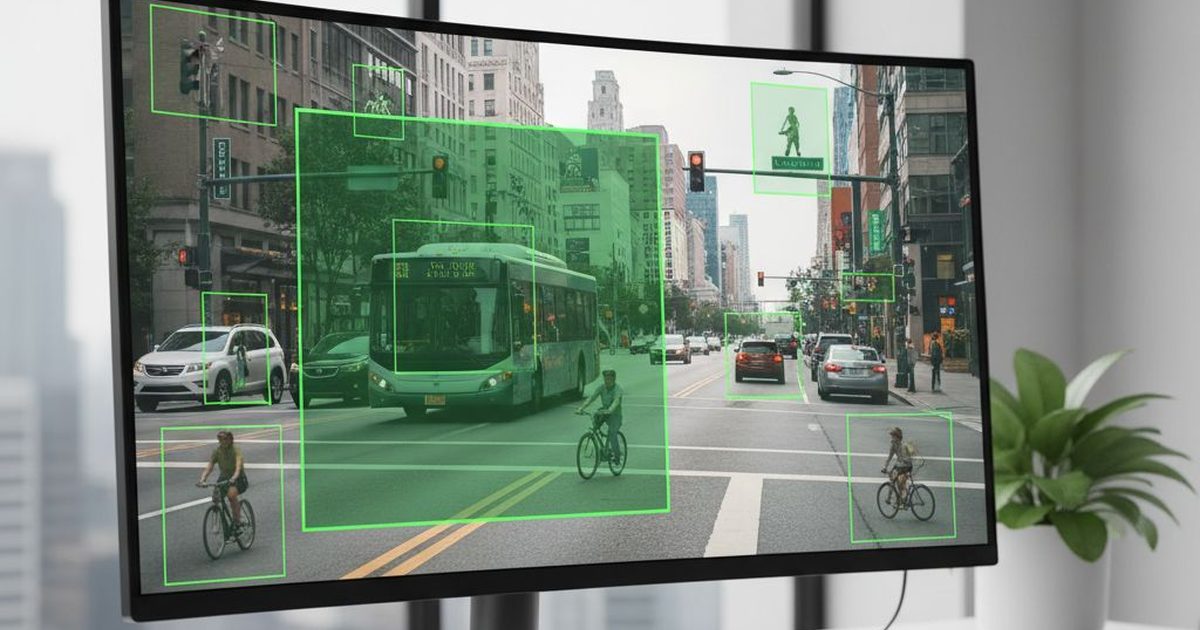
The computer vision landscape has shifted from training specialized convolutional networks for every niche task to a paradigm of foundation model adaptation. In 2026, the primary challenge for engineers is no longer the architecture of a custom backbone, but the orchestration of multi-modal vision-language models (VLMs) and their downstream refinement. We have reached a point where zero-shot detection often rivals the performance of supervised models from just three years ago, yet the bridge between a laboratory foundation model and a production-grade 60 FPS deployment remains a complex engineering feat.
Standardized computer vision workflows now prioritize data quality and prompt engineering over hyperparameter tuning. As we integrate deep learning into robotics, autonomous inspection, and healthcare, the focus has moved toward robust, explainable segmentation and the ability to handle 'open-vocabulary' scenarios. This article outlines the current state of detection and segmentation, providing a technical framework for building reliable systems in an era dominated by large-scale pre-training and specialized inference hardware.
The shift to unified vision architectures
For years, the industry distinguished sharply between object detection and semantic segmentation. Detection provided bounding boxes with high efficiency but low granularity, while segmentation provided pixel-level masks at a high computational cost. Modern computer vision workflows in 2026 have largely converged on unified architectures. These models treat detection, instance segmentation, and even keypoint estimation as a single multi-task problem, often utilizing a shared Transformer-based backbone with task-specific heads that are activated only as needed.
The dominance of Vision Transformers (ViT) has matured, with hierarchical window-based attention mechanisms replacing traditional convolutions in almost all high-accuracy pipelines. However, convolutions haven't disappeared; they now serve as 'early-exit' layers or preprocessing blocks for high-resolution input where full attention would be computationally prohibitive. When designing a workflow today, the first decision is whether to utilize a Mask2Former successor for precise pixel labeling or a YOLO-Next variant if the primary constraint is latency on mobile hardware.
We also see the integration of temporal consistency in video workflows. Instead of treating video as a sequence of independent frames, modern detection pipelines maintain a persistent latent state. This prevents 'flickering' in segmentation masks, a common failure mode in earlier iterations. The computational overhead of this temporal awareness is offset by 'mask propagation,' where the model only updates regions of the frame that have significantly changed, rather than re-calculating the entire scene from scratch.
Foundation models and zero-shot detection
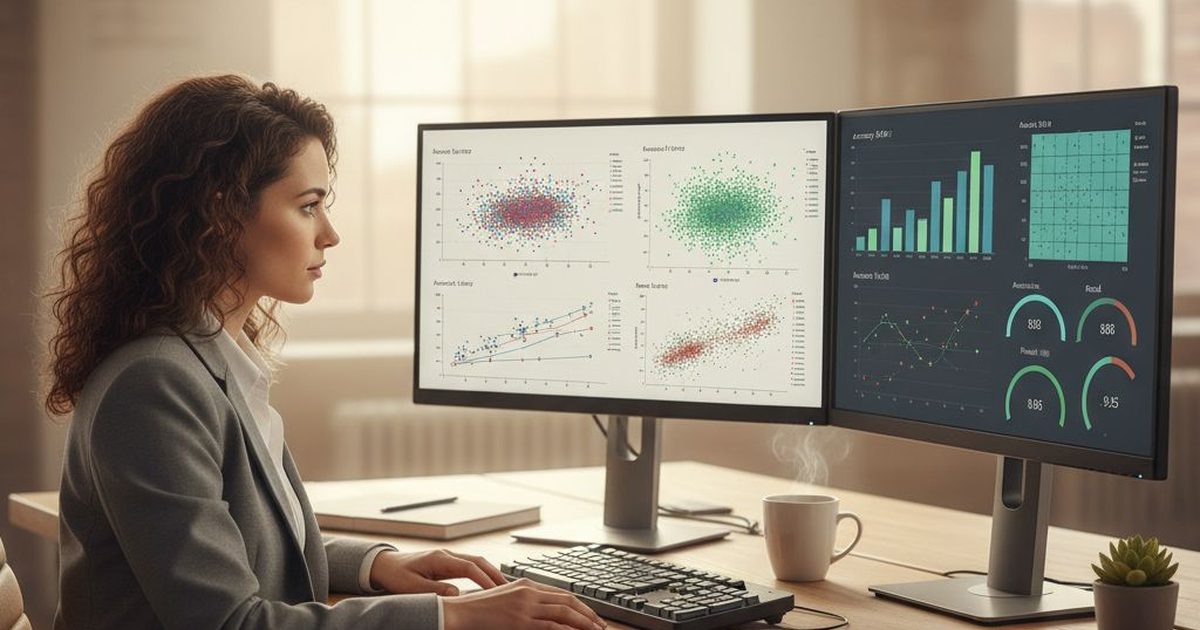
The most significant change in 2026 computer vision workflows is the role of zero-shot inference. Using models like Grounded-SAM-2 or advanced VLMs, developers can now define classes using natural language strings rather than integer IDs. For example, instead of training a model specifically to find 'cracks in concrete,' one can prompt a foundation model with the description 'structural fissures on a grey weathered surface'. This allows for rapid prototyping without a single labeled image.
However, zero-shot performance is rarely sufficient for safety-critical production systems. The workflow has evolved into a 'Distillation and Refinement' cycle. A large, expensive foundation model acts as an automated labeler for a vast dataset of unlabelled domain-specific images. These labels are then audited by a human-in-the-loop and used to fine-tune a much smaller, efficient student model. This approach bridges the gap between the broad knowledge of a VLM and the specialized accuracy required for industrial tasks.
When implementing this, engineers must be wary of 'hallucination' in vision models. Just as large language models can invent facts, vision models can 'detect' objects that match the linguistic prompt but aren't present in the visual features. To mitigate this, modern workflows include a confidence scoring mechanism that decouples the linguistic matching score from the visual objectness score. If the visual features don't strongly support an object's existence, the linguistic match is ignored, regardless of how well it fits the prompt.
Segmentation strategies: Semantic, Instance, and Panoptic
Choosing the right segmentation strategy is critical for balancing accuracy and resource consumption. Semantic segmentation remains the choice for background analysis (e.g., identifying 'road' vs. 'sidewalk'), but instance segmentation is now standard for any task involving discrete objects. Panoptic segmentation, which combines both, is no longer the niche research topic it was; it is the default for robotics where the relationship between objects and their environment is paramount.
In 2026, we utilize sparse-query mechanisms. Instead of predicting a mask for every pixel, the model identifies 'object queries' and generates binary masks only for those regions. This significantly reduces the memory footprint during the decoding stage. For high-resolution medical imaging or satellite analysis, we often employ a tiled workflow with a 'global context' branch. This branch processes a downsampled version of the entire image to maintain global consistency, while a high-resolution branch processes individual tiles to capture fine-grained details.
The trade-offs between these methods are summarized in the following comparison table, reflecting current 2026 benchmarks for a standard 1080p input stream on mid-range inference hardware.
| Workflow Type | Latency (ms) | Memory Usage | Best Use Case |
|---|---|---|---|
| Semantic (U-Net/SegFormer) | 8-12ms | Low | Terrain/Background classification |
| Instance (Query-based) | 18-25ms | Medium | Counting and tracking discrete units |
| Panoptic (Unified) | 30-45ms | High | Autonomous navigation and scene understanding |
| Zero-shot VLM Detection | 150ms+ | Very High | Rapid prototyping and edge-case discovery |

Real-time deployment and edge optimization
Deploying a vision model in 2026 requires a deep understanding of the target silicon. Whether you are targeting a TPU, a mobile NPU, or specialized edge AI chips, the workflow must include a quantization-aware training (QAT) phase. We have moved past simple post-training quantization. To maintain accuracy in INT8 or even FP8 formats, the model must be exposed to the noise introduced by quantization during the fine-tuning process.
Model pruning is another essential step. By identifying and removing redundant attention heads or convolutional filters, we can often reduce model size by 30-40% with less than a 1% drop in mAP (mean Average Precision). In modern computer vision workflows, this is often automated using neural architecture search (NAS) that is constrained by the specific latency requirements of the deployment target. If the target hardware supports sparsity at the hardware level, the speedups can be even more dramatic.
Latency is not just about the model's forward pass. It involves the entire data pipeline: image decoding, resizing, normalization, and the transfer of tensors between the CPU and GPU/NPU memory. Efficient workflows now use 'zero-copy' memory management, where the camera driver writes directly into a memory buffer that the AI accelerator can read, bypassing the overhead of traditional operating system copies. This can shave 5-10ms off the end-to-end latency, which is the difference between a system that feels responsive and one that lags.
Data-centric engineering and synthetic data
The focus has shifted from model-centric to data-centric engineering. In 2026, we rarely manually label tens of thousands of images. Instead, we use a 'Small Real, Large Synthetic' strategy. We collect a high-quality, diverse set of real-world 'gold standard' images and use Generative AI—specifically latent diffusion models—to generate hundreds of thousands of variations. These variations account for different lighting, weather, and occlusions that might be rare in the real world but critical for safety.
The danger of synthetic data is 'domain shift,' where the model learns features of the synthetic generator rather than the objects themselves. To combat this, modern workflows use domain randomization, where synthetic images are purposefully made to look 'unrealistic' in ways that force the model to focus on structural features rather than texture. We also employ active learning, where the model identifies which real-world images it is most uncertain about, flagging those for human review and inclusion in the next fine-tuning cycle.
Data cleaning has also become automated. We use 'influence functions' to identify training samples that negatively impact the model's performance on the validation set. By removing these noisy or mislabeled samples, we can often improve performance more effectively than by adding more data. This refined dataset becomes the core intellectual property of the project, far more so than the specific transformer architecture used.
In 2026, the performance of a vision system is determined less by the depth of your network and more by the diversity of your edge cases and the efficiency of your inference pipeline.

Addressing failure modes in computer vision workflows
Despite the advancements, computer vision systems still fail. One common failure mode is 'contextual bias.' If a model always sees a 'hammer' in a workshop, it might fail to detect a hammer on a kitchen counter, or worse, detect a spatula as a hammer because of the location. Robust workflows now include 'de-biasing' steps where objects are digitally swapped into unexpected contexts during training to ensure the model learns the object's geometry rather than its surroundings.
Another significant issue is 'small object detection.' Even with high-resolution input, the signal-to-noise ratio for an object that occupies only a few pixels is extremely low. In 2026, we address this using Feature Pyramid Networks (FPN) that are enhanced with lateral connections and 'attention zooming.' When the model detects a potential object in a low-resolution pass, it triggers a second, high-resolution pass on that specific crop—a technique known as 'dynamic refinement.'
Adversarial attacks, once a theoretical concern, are now a practical reality. Subtle patterns on a surface can trick a segmentation model into ignoring a 'stop' sign or misidentifying a person. Modern computer vision workflows incorporate 'adversarial training,' where the model is challenged with perturbed images during fine-tuning. This increases the model's smoothness and makes it more resilient to both intentional attacks and natural sensor noise.
Common mistakes in modern pipelines
A frequent error is over-reliance on zero-shot VLMs for production without a specialized 'calibration' layer. These models are often overconfident in their predictions. Without applying Platt scaling or temperature rescaling to the output logits, the probability scores returned by the model are effectively meaningless for decision-making. You may see a 0.99 confidence for a false positive, leading to system failure if there is no secondary verification.
Another mistake is ignoring the 'long tail' of data. Many practitioners focus on improving the mAP of the most common classes while the model remains completely broken for 5% of critical edge cases. A robust workflow requires class-balanced loss functions (like Focal Loss) and a rigorous evaluation suite that specifically tests for rare but high-stakes scenarios. If your model works 99% of the time but fails every time it rains, it is not a production-ready system.
- Neglecting to account for lighting variations: Models trained in
12:00 PMlighting often fail at6:00 PMor under sodium-vapor streetlights. - Over-smoothing masks: Aggressive post-processing like
Conditional Random Fields (CRF)can look better but may actually hide underlying detection errors. - Ignoring sensor-specific noise: A model trained on high-end
DSLRdata will struggle with the grain and motion blur of an industrialIPcamera. - Static thresholding: Using a single confidence threshold for all classes, regardless of their inherent difficulty or the cost of a false positive.
What to practise this week
To stay competitive in the 2026 computer vision landscape, you must move beyond building 'toy' models on clean datasets. The following steps will help you master the current tools and methodologies used in high-performance environments.
- Implement a 'Grounded' workflow: Use a vision-language model to automatically generate bounding boxes for a niche dataset, then audit the results to understand VLM failure modes.
- Experiment with Parameter-Efficient Fine-Tuning (PEFT): Instead of fine-tuning an entire vision transformer, try using
LoRA(Low-Rank Adaptation) to adapt a foundation model to a specific task with minimal compute. - Profile an end-to-end pipeline: Use a profiling tool to measure the time spent on image preprocessing versus model inference. Optimize the 'bottleneck' using multi-threading or hardware acceleration.
- Build a synthetic data bridge: Use a generative model to create 100 images of an object in 'unusual' settings and test if your current detection model can still identify them correctly.
- Apply quantization: Take a pre-trained
FP32model and convert it toINT8using a library likeTensorRTorOpenVINO, then measure the accuracy drop and speed increase.
By focusing on these practical aspects of computer vision workflows, you move from being a consumer of AI models to an architect of AI systems. The ability to manage the interplay between large foundation models, efficient deployment, and high-quality data is the most valuable skill set in the industry today.