

The enterprise landscape has moved beyond simple text-to-text interactions. While early generative AI implementations focused on chatbots and summarization of clean text strings, modern industrial requirements demand systems that perceive the world more like human operators. A legal analyst does not just read a contract; they look at signatures, stamps, and layout structures. A field engineer does not just describe a fault; they provide audio of a mechanical whine and photos of a corroded valve. Transitioning to multimodal AI means moving away from isolated data silos and toward a unified representation where different media types share a common semantic space.
Building these pipelines requires a fundamental shift in how we think about data ingestion and embedding. In the previous era, practitioners could rely on standard NLP libraries to clean text and send it to a large language model. In a multimodal context, the complexity increases exponentially. We must manage heterogeneous sampling rates for audio, diverse resolutions for images, and complex spatial coordinates for document layouts. The goal is no longer just retrieving a relevant paragraph, but synchronizing visual, auditory, and textual evidence to provide high-fidelity reasoning. This article outlines the architectural patterns, technical constraints, and deployment strategies necessary for robust multimodal enterprise systems.
The shift from unimodal to multimodal architectures
The core innovation driving current systems is the move from separate encoders to natively multimodal models. Early attempts at multimodal search involved using an image-captioning model to generate text for an image, then indexing that text. This approach, known as late fusion at the application level, is inherently lossy. It discards the rich, non-verbal features of the original data. Modern architectures utilize joint-embedding spaces, such as those derived from CLIP (Contrastive Language-Image Pre-training) or its more advanced 2026 successors, where images and text are mapped to the same vector space.
In an enterprise setting, this allows for cross-modal retrieval. You can query a database with the text "broken blue bracket" and retrieve images of broken blue brackets without those images ever being explicitly tagged. However, the computational cost of maintaining these unified embeddings is higher. Processing a 10-second audio clip or a 4K image through a transformer-based encoder requires significantly more FLOPs (floating-point operations) than processing a paragraph of text. Engineers must balance the depth of the embedding—the number of dimensions in the vector—against the latency requirements of the end-user application.
Furthermore, the choice between fine-tuning a foundational model and using RAG (Retrieval-Augmented Generation) becomes more complex. For multimodal RAG, the vector database must support diverse data types. Indexing strategies like HNSW (Hierarchical Navigable Small World) are still standard, but the distance metrics must be carefully tuned to account for the different distributions of image vectors versus text vectors. In 2026, we increasingly see native multimodal models that ingest interleaved data—text, images, and audio tokens—directly into the transformer block, allowing the model to reason across modalities in its hidden layers.
Document processing and spatial awareness
Enterprise data is largely locked in documents—PDFs, slide decks, and spreadsheets. Standard OCR (Optical Character Recognition) often fails to capture the semantic meaning conveyed by layout. A table in a financial report is not just a sequence of words; its meaning is derived from the intersection of rows and columns. To handle this, multimodal AI pipelines now employ layout-aware models like LayoutLM or vision-language models that treat the entire page as an image. This preserves the spatial relationship between elements, which is critical for understanding hierarchical data.
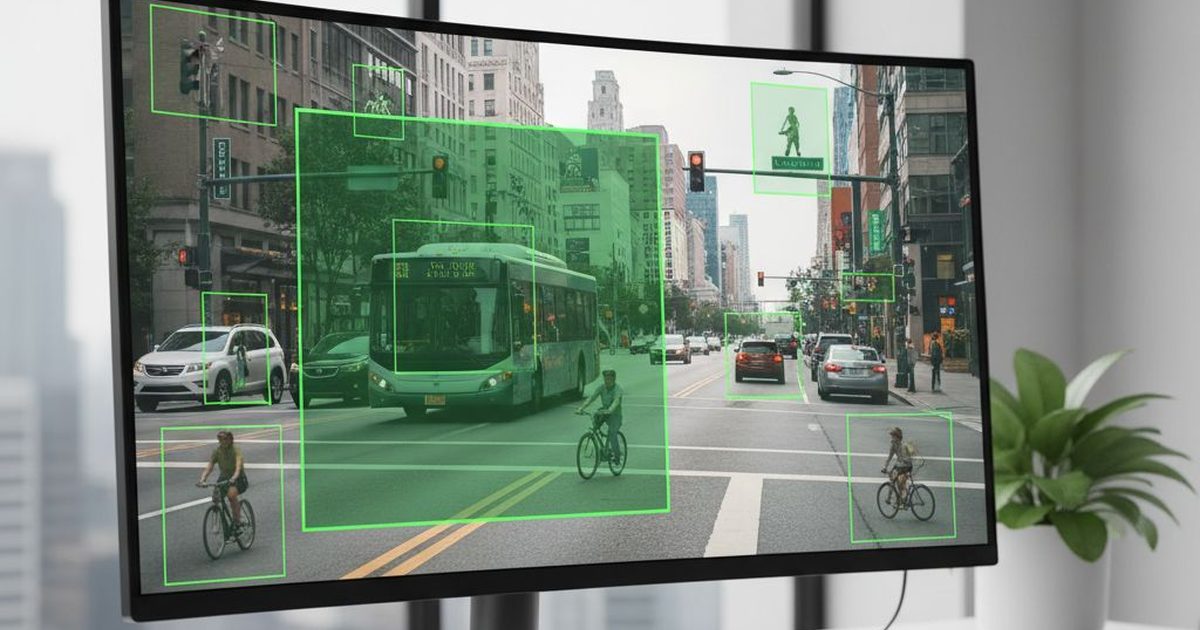
When building a document pipeline, the first step is layout analysis. This involves identifying bounding boxes for text blocks, images, tables, and headers. Instead of just extracting text, we generate a structured representation, often in JSON or Markdown, that includes coordinate data. This allows the LLM to 'see' that a specific footnote belongs to a specific table. Failure to include spatial coordinates often leads to hallucinated associations where the model attributes a value from one column to a header in another.
Cost-benefit analysis is essential here. Using a high-end vision model to 'read' every page of a million-page archive is prohibitively expensive. A more efficient pattern is a two-stage approach: use a lightweight layout detection model to identify pages with complex structures (tables, charts), and route those to a heavy multimodal model, while processing standard text-heavy pages with a cheaper, high-speed OCR and a standard text embedding model.
Integrating audio and speech signals
Audio is the most underutilized data source in many enterprises. Beyond simple transcription, audio contains prosodic information—tone, urgency, and background noise—that provides vital context. In a customer service environment, a transcript might read 'That is fine,' but the audio may reveal sarcasm or extreme frustration. Modern multimodal pipelines use models that can process raw audio waveforms or spectrograms directly, rather than relying solely on a text-based intermediate step.
Implementation involves specific challenges related to temporal alignment. Unlike images, which are static, audio is sequential. When a user asks a question about a specific part of a recorded meeting, the system must navigate the time-axis accurately. This is handled through temporal windowing, where audio is chunked into overlapping segments. Each segment is embedded, and the metadata includes start and end timestamps. In 2026, we utilize Whisper-derived architectures that produce both a text transcript and a feature vector for every few milliseconds of sound.
Latency is the primary bottleneck for audio. Real-time streaming applications require low-latency encoders that can process audio chunks as they arrive. This often necessitates the use of specialized hardware like LPUs (Language Processing Units) or optimized TensorRT engines. For batch processing, however, the focus shifts to throughput, where parallelizing the encoding of thousands of hours of audio can be managed through distributed task queues like Celery or Ray.

Multimodal vector databases and retrieval
The vector database is the nervous system of a multimodal AI application. In a unimodal system, the database stores text embeddings. In a multimodal system, it stores a heterogeneous collection of vectors that represent different data types but exist in the same mathematical space. This allows for 'Query-by-Example' functionality. For instance, an engineer could upload a photo of a specific industrial component to retrieve the maintenance manual (text) and the sound of the machine running normally (audio).
Choosing the right distance metric is crucial. While cosine similarity is standard, some multimodal models perform better with Euclidean distance (L2) or Dot Product, depending on how the joint-embedding space was trained. Furthermore, metadata filtering is more important than ever. If a query is specifically looking for an image, the search should be restricted to the image subspace of the vector database to avoid noise from similar-sounding text concepts.
| Modality | Input Format | Primary Processing Challenge | Key Metric |
|---|---|---|---|
| Text | Strings / Tokens | Semantic ambiguity and context window | Perplexity / BLEU |
| Image | Pixel Tensors | Spatial resolution vs. compute cost | mAP / FID |
| Audio | Waveforms / Spectrograms | Temporal alignment and noise | WER / DER |
| Document | PDF / OCR Layouts | Maintaining spatial relationships | Layout F1 Score |
Fine-tuning and adaptation strategies
Pre-trained multimodal models often struggle with domain-specific imagery or jargon. A model trained on internet data might recognize a generic 'car,' but fail to distinguish between specific specialized medical imaging modalities or proprietary circuit board components. Enterprise practitioners must often perform Parameter-Efficient Fine-Tuning (PEFT), such as LoRA (Low-Rank Adaptation), to steer the model toward specialized data distributions.
Fine-tuning a multimodal model is more complex than a text model because the loss function must account for all modalities. For example, if you are fine-tuning a vision-language model for medical records, the loss function needs to minimize the distance between the X-ray image and the correct radiologist's description. This requires high-quality, paired data, which is often the biggest hurdle in enterprise AI. Synthetic data generation—using one model to describe images or create variations of audio—is a common 2026 strategy to augment limited proprietary datasets.
Another technique is adapter-based learning. Instead of changing the weights of the entire massive model, small 'adapter' layers are inserted between the pre-trained blocks. These adapters are trained on the specific enterprise data (e.g., technical diagrams), allowing the base model to retain its general knowledge while gaining specific expertise. This significantly reduces the memory footprint and the time required for training, making it feasible to run on a single node of H100 or B200 GPUs.
Evaluation of multimodal outputs
Evaluating a multimodal system is notoriously difficult. How do you quantify if a model correctly 'understood' an image in the context of a text query? We move beyond simple accuracy to Multi-modal Benchmarking. This includes tests like Visual Question Answering (VQA) and Image-Text Matching (ITM). In production, we also track cross-modal coherence—ensuring that the generated text output does not contradict the information present in the input image or audio file.

Infrastructure and scaling considerations
Multimodal AI demands a rethink of the infrastructure stack. The sheer size of the data—especially high-resolution video or raw audio—requires high-throughput storage solutions and fast interconnects. Loading a batch of images into GPU memory can become a bottleneck if the data is stored in a standard object store like S3 without a high-speed caching layer like Redis or Alluxio. Data loaders must be optimized to perform resizing and normalization on the CPU in parallel with the GPU's forward pass.
Model serving also presents challenges. Multimodal models often have asymmetric compute profiles; the vision encoder might take 200ms while the text decoder takes 500ms. Dynamic batching is essential here. By grouping requests of similar modalities together, we can maximize GPU utilization. However, we must be careful not to introduce excessive 'tail latency' where a large audio file delays the processing of several small text queries.
The success of a multimodal system is defined not by the size of the model, but by the precision of the alignment between its diverse data representations.
Common mistakes in multimodal implementation
- Ignoring data normalization: Different modalities have different scales; failing to normalize pixel values or audio decibels leads to gradient instability during fine-tuning.
- Over-reliance on OCR: Treating documents as plain text strings loses the semantic value of tables and charts, leading to poor reasoning on financial or technical data.
- Neglecting the context window: Multimodal tokens (especially images) take up a significant portion of the LLM's context window, often leaving little room for historical dialogue or text-based instructions.
- Uniform embedding strategies: Using the same embedding model for vastly different domains (e.g., using a general-purpose CLIP model for satellite imagery) results in low retrieval precision.
- Inadequate evaluation: Relying solely on text-based metrics like ROUGE for multimodal outputs, which ignores the factual correctness of visual or auditory elements.
Future-proofing your enterprise AI
As we look further into 2026, the trend is toward omni-models that handle all modalities in a single, unified architecture. The distinction between 'vision models' and 'language models' is blurring. For enterprises, this means the focus should shift from building specific pipelines for each data type to building a robust 'data fabric' that can feed these omni-models. This involves cleaning and versioning multimodal data with the same rigor previously reserved for structured databases.
Privacy and security in multimodal systems are also evolving. Redacting a name from a text file is simple; redacting a face from a video or a voice from an audio clip while maintaining the utility of the data is a complex task. Multi-modal PII (Personally Identifiable Information) detection is becoming a standard step in the ingestion pipeline, using specialized models to mask sensitive visual or auditory features before they reach the embedding stage.
What to practise this week
- Experiment with a joint-embedding model like
CLIPorSigLIPto search a small dataset of images using only text queries, observing where the semantic mapping fails. - Build a simple RAG pipeline using a document that contains both text and tables; compare the retrieval accuracy of a text-only approach versus a layout-aware vision-language approach.
- Test an audio-to-text model on a recording with significant background noise and evaluate how the quality of the transcript affects downstream LLM reasoning.
- Explore a vector database that supports multimodal indexing and practice writing queries that combine text filters with image similarity scores.
- Analyze the token consumption of a multimodal model by feeding it a high-resolution image and calculating how many text tokens worth of space it occupies in the context window.